The Invisible Puppeteers: Unmasking Cognitive Bias and Its Impact on Decision-Making
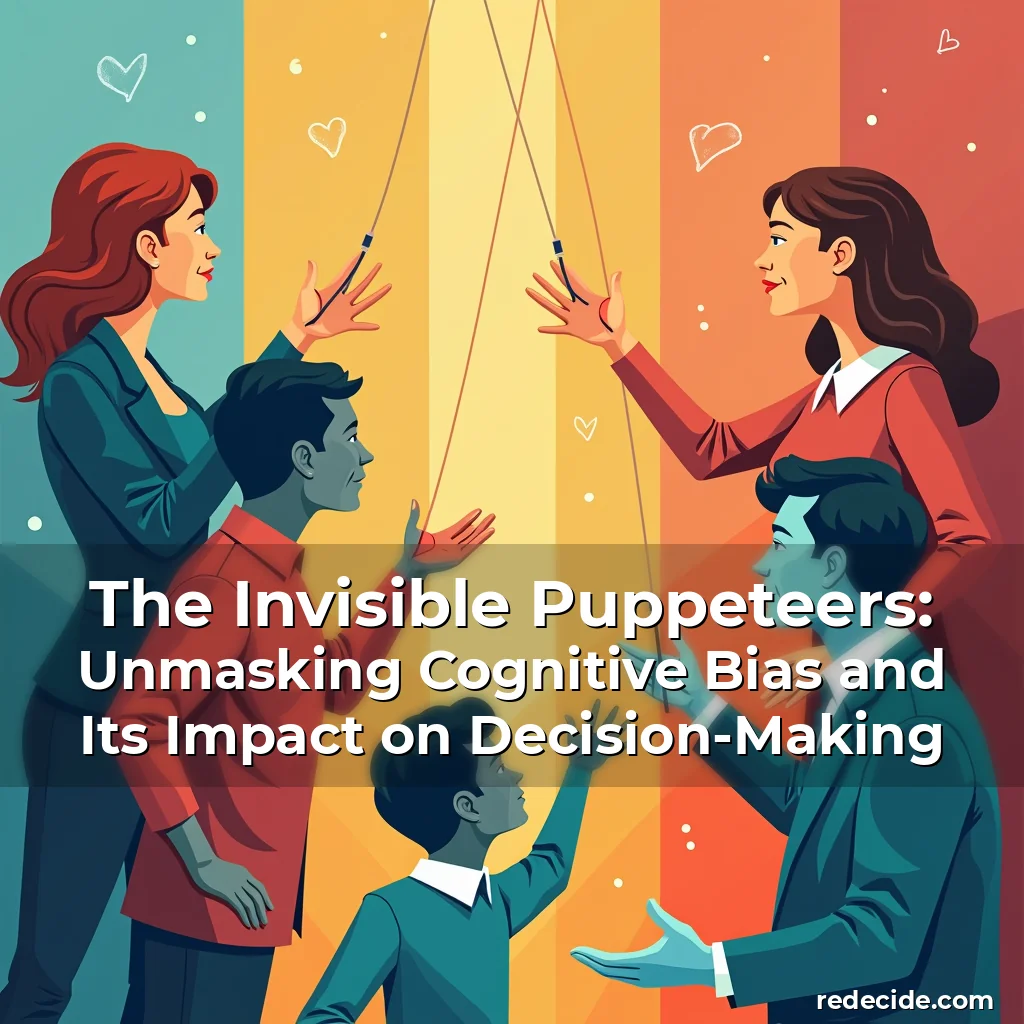
In every moment of decision-making, from choosing your morning coffee to making life-altering career choices, unseen forces shape your thoughts and actions. These invisible puppeteers are known as cognitive biases—systematic patterns of deviation from norm or rationality in judgment.
Cognitive biases have been studied extensively by psychologists and neuroscientists over decades. They reveal how our brains, while incredibly powerful, can sometimes mislead us through mental shortcuts that prioritize speed over accuracy.
The Origins of Cognitive Biases
Evolution has sculpted human cognition to survive in complex environments where quick decisions could mean the difference between life and death. Our ancestors who made rapid judgments often survived longer than those who hesitated.
This evolutionary legacy persists today, even though modern problems rarely require split-second survival instincts. The same brain mechanisms that helped early humans identify threats now influence contemporary decision-making processes.
Research shows that these biases emerge from three primary sources:
- Heuristics: Mental shortcuts developed through experience and learning
- Information Processing Limitations: The brain’s capacity to handle information is finite
- Social Influences: Cultural norms and interpersonal dynamics shape perception
These origins explain why biases are so deeply ingrained in human psychology. Understanding their evolutionary roots helps contextualize their persistence in modern society.
The Psychology Behind Cognitive Biases
Cognitive biases operate within intricate neural networks involving the prefrontal cortex, amygdala, and other key brain regions. This interconnected system governs both logical reasoning and emotional responses.
Functional MRI studies demonstrate that when faced with ambiguous situations, the brain activates pattern recognition circuits similar to those used during survival challenges. This automatic processing creates unconscious assumptions about new scenarios.
A fascinating aspect of these biases is their dual nature—they simultaneously protect against information overload while increasing vulnerability to systematic errors. This paradox highlights the trade-offs inherent in human cognition.
Common Types of Cognitive Biases
Psychologists have identified hundreds of distinct cognitive biases, but several stand out due to their frequency and impact. One such bias is confirmation bias—the tendency to seek out information confirming existing beliefs.
This phenomenon manifests in various ways, including selective attention to supportive evidence and discounting contradictory data. It explains why people often remain convinced despite overwhelming opposing evidence.
Other prevalent biases include anchoring bias, where initial information disproportionately influences subsequent judgments. For example, real estate buyers may anchor on an initially quoted price rather than objective market values.
The availability heuristic is another common bias, causing individuals to estimate probabilities based on easily recalled examples rather than statistical reality. This explains why rare events seem more likely after recent exposure.
Dual process theory suggests these biases arise from two modes of thinking: fast intuitive processing versus slow analytical reflection. Recognizing this distinction is crucial for mitigating biased decisions.
How Cognitive Biases Affect Everyday Decisions
From consumer behavior to professional relationships, cognitive biases subtly guide daily choices. In retail settings, stores strategically place high-margin items near checkout areas exploiting the scarcity principle.
Marketing professionals use loss aversion principles, knowing people fear losing something more than they value gaining equivalent benefits. This understanding drives many sales strategies.
Personal relationships also reflect these biases, particularly in self-serving attribution. Individuals tend to attribute successes to personal qualities while blaming external factors for failures.
Even financial decisions show strong bias effects, with investors often holding onto failing stocks due to the sunk cost fallacy. This irrational attachment leads to continued losses despite clear indicators to cut losses.
Biases in Professional Settings
Workplace environments are rife with cognitive biases influencing hiring practices, promotions, and team dynamics. Confirmation bias plays a significant role in performance evaluations, leading managers to overlook underperforming employees.
Hiring decisions frequently suffer from halo effect bias, where one positive trait unduly influences overall assessment. A candidate with impressive credentials might receive undue consideration despite relevant shortcomings.
Groupthink phenomena manifest in corporate culture, creating echo chambers that stifle innovation and critical thinking. Organizations must actively combat these tendencies through structured decision-making protocols.
Leadership development programs increasingly emphasize metacognition training to help executives recognize and counteract their own biases. This awareness transforms management styles across industries.
Bias Awareness in Education Systems
Educational institutions face unique challenges in addressing cognitive biases among students and educators alike. Teachers’ implicit biases can unintentionally affect student outcomes through differential treatment.
Curriculum design incorporates bias education starting from elementary levels, teaching children to question assumptions and evaluate information critically. This approach fosters intellectual resilience early in development.
Higher education institutions implement workshops focusing on identifying and overcoming academic biases affecting research methodologies and peer reviews. These initiatives enhance scholarly integrity across disciplines.
Graduate programs specifically train future leaders in recognizing cognitive distortions that influence policy decisions and social interventions. This specialized knowledge prepares graduates for impactful careers.
Tech Industry and Algorithmic Biases
The digital age presents new frontiers for cognitive bias research, particularly regarding algorithmic decision-making systems. Machine learning models often inherit biases present in their training data sets.
Face recognition technologies exhibit racial disparities due to imbalanced datasets containing predominantly white faces. Such technical limitations raise serious ethical concerns in law enforcement applications.
Data scientists work diligently to detect and mitigate these algorithmic prejudices through diverse dataset curation and transparency measures. However, complete elimination remains a formidable challenge.
The intersection of AI ethics and cognitive science continues evolving, prompting ongoing debates about accountability and fairness in automated decision-making systems.
Healthcare and Medical Decision-Making
Medical professionals encounter numerous cognitive biases impacting patient care quality. Diagnosis-related errors often stem from anchoring bias, where physicians fixate on initial symptoms without considering alternative possibilities.
Prioritization of familiar conditions over less common ones contributes to diagnostic delays. This tendency reflects the brain’s preference for certainty in uncertain situations.
Clinical trials must account for experimenter bias, where researchers unconsciously influence results through expectations or interactions with participants. Double-blind study designs aim to minimize these effects.
Electronic health records introduce new dimensions of bias through data interpretation algorithms that may reinforce systemic inequities in healthcare delivery.
Overcoming Cognitive Biases
Strategies exist to reduce the impact of cognitive biases on decision-making processes. Mindfulness meditation cultivates metacognitive awareness, helping individuals notice thought patterns before acting on them.
Critical thinking frameworks provide structured approaches to evaluating information objectively. Techniques like the Socratic method encourage questioning underlying assumptions systematically.
Decision journals can serve as useful tools for tracking choices and reflecting on potential biases involved in each outcome. Regular review promotes conscious refinement of decision-making habits.
Organizational cultures that foster psychological safety enable open discussion of biases without fear of reprisal. This environment encourages continuous improvement in collective decision-making capabilities.
The Future of Cognitive Bias Research
Ongoing neuroscience research explores brain plasticity related to bias mitigation techniques. Studies indicate that targeted cognitive exercises can reshape neural pathways associated with certain biases.
Emerging fields like computational psychiatry combine computer modeling with clinical observations to better understand bias formation mechanisms. These interdisciplinary approaches promise transformative discoveries.
As artificial intelligence becomes more integrated into human decision-making, researchers investigate how hybrid human-machine systems interact with cognitive biases. This area holds immense potential for improving decision quality.
Ethical considerations surrounding bias correction methods will become increasingly important as technology advances. Balancing efficiency gains with individual autonomy requires careful navigation.
The evolution of bias detection tools—from simple checklists to sophisticated AI diagnostics—promises greater accessibility for individuals seeking to improve their decision-making skills.
Future educational curricula may incorporate virtual reality simulations exposing learners to various bias scenarios in immersive environments. These interactive experiences could revolutionize how we teach critical thinking skills.
Conclusion
Cognitive biases represent fundamental aspects of human cognition that influence every facet of decision-making. While not inherently negative, these mental shortcuts create vulnerabilities when applied uncritically.
Recognizing and managing cognitive biases empowers individuals to make more informed choices across different domains of life. This awareness enhances personal growth and improves collective problem-solving abilities.
By cultivating mindfulness, employing critical thinking frameworks, and fostering inclusive organizational cultures, we can transform these innate tendencies into strengths rather than weaknesses.
Continued exploration of cognitive biases promises exciting advancements in neuroscience, education, and technology sectors. Embracing this complexity enriches our understanding of what it means to think clearly in an imperfect world.