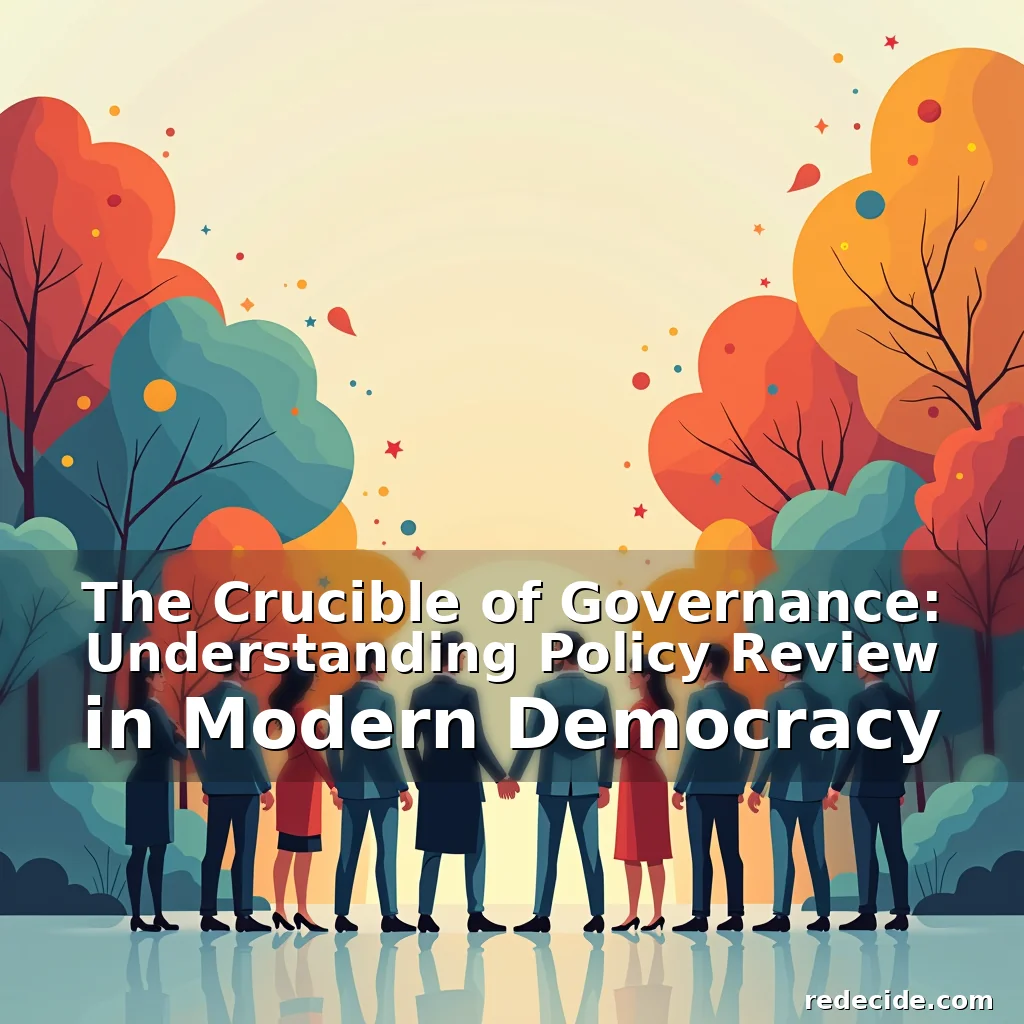
The Crucible of Governance: Understanding Policy Review in Modern Democracy
In an era marked by rapid societal change and evolving challenges, policy review has emerged as a cornerstone of effective governance. This process involves critically examining existing policies to ensure they remain relevant, efficient, and aligned with public needs.
Policy reviews are not merely bureaucratic exercises; they represent vital mechanisms through which governments can adapt, innovate, and respond to emerging issues that shape modern societies.
The Foundations of Policy Review
A thorough understanding of policy review begins with recognizing its multifaceted nature. It encompasses both formal assessments mandated by legislation and informal evaluations driven by stakeholder feedback.
This dual approach allows policymakers to address immediate concerns while also preparing for long-term strategic goals. By integrating quantitative data analysis with qualitative input from affected communities, policy review becomes a dynamic tool for improvement.
One essential component is establishing clear objectives for each review cycle. These objectives might include evaluating effectiveness, assessing compliance, identifying inefficiencies, or exploring opportunities for innovation.
Moreover, defining success metrics at the outset ensures that evaluation efforts remain focused and measurable. This foundational step sets the stage for meaningful outcomes across various sectors.
- Data-driven decision making: Utilizing empirical evidence helps minimize bias and enhances transparency in policy formulation processes.
- Stakeholder engagement: Involving diverse voices fosters inclusivity and increases the likelihood of successful implementation strategies.
Evaluating Existing Policies Through Multiple Lenses
An effective policy review considers several critical dimensions simultaneously. Cost-benefit analyses provide objective measures against which policy performance can be measured objectively.
Equity considerations examine how different demographic groups experience policy impacts differently. Ensuring fairness requires intentional design choices during initial drafting stages.
Sustainability factors assess whether current practices align with environmental protection standards and resource conservation principles over time horizons ranging from decades to centuries.
Public perception surveys capture real-time sentiments regarding implemented programs. These insights help bridge gaps between governmental initiatives and citizen expectations.
When combined systematically, these perspectives create comprehensive frameworks capable of guiding transformative changes within complex systems.
Implementing Structured Methodologies for Effective Reviews
To maximize impact, structured methodologies guide every phase of the policy review lifecycle. Establishing timelines creates accountability by setting benchmarks against which progress can be monitored regularly.
Designing multidisciplinary teams brings together experts from varied backgrounds who contribute specialized knowledge necessary for nuanced interpretations of findings.
Utilizing standardized templates streamlines documentation procedures while maintaining consistency across departments working concurrently on related projects.
Digital platforms facilitate collaboration among remote participants ensuring broader representation without compromising efficiency levels typically associated with centralized operations.
These procedural elements collectively enhance operational coherence enabling smooth transitions between assessment phases leading towards informed recommendations.
The Role of Technology in Enhancing Policy Review Processes
Modern technological advancements have revolutionized traditional methods used in conducting policy reviews today. Artificial intelligence tools now assist analysts in processing vast amounts of textual information efficiently.
Big data analytics enable identification of patterns previously undetectable using conventional statistical techniques alone. Predictive modeling capabilities allow forecasting potential consequences before actual implementations occur.
Cybersecurity protocols protect sensitive information gathered during investigations preventing unauthorized access or manipulation attempts aimed at undermining integrity of results obtained.
Cloud-based storage solutions offer secure yet accessible environments where stakeholders worldwide can participate meaningfully despite geographical constraints limiting physical presence requirements traditionally imposed upon them.
Such innovations significantly reduce administrative burdens freeing up resources devoted primarily toward core analytical functions rather than logistical management tasks often consuming considerable portions of available budgets allocated specifically for such endeavors.
Case Studies Illustrating Successful Policy Revisions
Examining historical precedents provides concrete examples demonstrating tangible benefits derived from well-executed policy revisions. One notable instance involved reforms initiated following widespread criticism concerning healthcare accessibility disparities observed nationwide.
Through rigorous examination involving extensive consultations with medical professionals patient advocates insurers representatives etc., significant improvements were achieved including expanded coverage options reduced out-of-pocket expenses improved preventive care services availability etc.
Similarly, education sector transformations resulted from systematic appraisals highlighting inadequacies present within outdated curricula structures teaching methodologies infrastructure conditions affecting learning experiences negatively impacting student achievement rates overall.
Reforms introduced subsequently incorporated interactive digital learning modules personalized instruction plans updated facilities equipped with state-of-the-art technology fostering enhanced educational outcomes across diverse socioeconomic backgrounds represented within school populations served thereby promoting greater equity amongst learners regardless their individual circumstances.
Challenges Faced During Policy Implementation Phases Following Reviews
Despite meticulous planning efforts undertaken prior to initiating any new initiative based upon revised guidelines established through exhaustive evaluation cycles, numerous obstacles frequently arise impeding seamless transition periods required for full realization envisioned improvements.
Bureaucratic inertia often manifests itself through resistance exhibited by entrenched interests benefiting disproportionately under status quo arrangements preferring stability over disruptive change even when latter proves beneficial majority populace concerned.
Lack adequate funding sources remains persistent challenge hindering capacity building activities necessitated transforming theoretical proposals into practical applications requiring substantial investments spanning multi-year durations depending complexity scale ambitions pursued.
Additionally, unforeseen external events such economic downturns natural disasters geopolitical shifts may disrupt carefully laid plans forcing recalibrations midstream altering trajectories originally anticipated thereby complicating already delicate balance maintained attempting reconcile competing priorities simultaneously addressed during initial design stages.
Fostering Continuous Improvement Cultures Within Organizations Involved In Policymaking
Cultivating organizational cultures committed continuous enhancement constitutes fundamental prerequisite sustaining longevity relevance efficacy governing bodies entrusted managing affairs impacting millions daily lives.
Promoting open communication channels encourages free flow ideas suggestions criticisms facilitating transparent dialogue exchanges occurring naturally organically rather artificially constructed forums designed solely purpose eliciting responses predefined questions limiting scope depth exploration possible otherwise restricted avenues expression thoughts feelings experienced individuals engaged processes described hereinabove.
Encouraging interdisciplinary cooperation dismantles silos isolating departments units operating independently lacking shared vision common goal ultimately weakening collective strength needed confronting multifaceted problems demanding integrated solutions combining expertise disparate fields disciplines converging toward singular end achieving optimal results desired audiences targeted through respective interventions deployed accordingly.
Establishing regular intervals dedicated reflection evaluation reinforces commitment ongoing development ensuring adaptations made promptly addressing emerging trends evolving landscape demands sustained attention vigilance responsiveness characteristics hallmark resilient institutions thriving amidst constant flux characterizing contemporary world order.
Conclusion
Policy review stands as an indispensable mechanism empowering democracies navigate complexities inherent modern governance effectively responsibly ethically.
By embracing structured approaches leveraging cutting-edge technologies prioritizing inclusive participation cultivating adaptive mindsets organizations involved policymaking elevate quality decisions rendered contributing positively shaping future trajectories societies governed through collaborative efforts rooted mutual respect trust.
“`
“`html
The Crucible of Governance: Understanding Policy Review in Modern Democracy
In an era marked by rapid societal change and evolving challenges, policy review has emerged as a cornerstone of effective governance. This process involves critically examining existing policies to ensure they remain relevant, efficient, and aligned with public needs.
Policy reviews are not merely bureaucratic exercises; they represent vital mechanisms through which governments can adapt, innovate, and respond to emerging issues that shape modern societies.
The Foundations of Policy Review
A thorough understanding of policy review begins with recognizing its multifaceted nature. It encompasses both formal assessments mandated by legislation and informal evaluations driven by stakeholder feedback.
This dual approach allows policymakers to address immediate concerns while also preparing for long-term strategic goals. By integrating quantitative data analysis with qualitative input from affected communities, policy review becomes a dynamic tool for improvement.
One essential component is establishing clear objectives for each review cycle. These objectives might include evaluating effectiveness, assessing compliance, identifying inefficiencies, or exploring opportunities for innovation.
Moreover, defining success metrics at the outset ensures that evaluation efforts remain focused and measurable. This foundational step sets the stage for meaningful outcomes across various sectors.
- Data-driven decision making: Utilizing empirical evidence helps minimize bias and enhances transparency in policy formulation processes.
- Stakeholder engagement: Involving diverse voices fosters inclusivity and increases the likelihood of successful implementation strategies.
Evaluating Existing Policies Through Multiple Lenses
An effective policy review considers several critical dimensions simultaneously. Cost-benefit analyses provide objective measures against which policy performance can be measured objectively.
Equity considerations examine how different demographic groups experience policy impacts differently. Ensuring fairness requires intentional design choices during initial drafting stages.
Sustainability factors assess whether current practices align with environmental protection standards and resource conservation principles over time horizons ranging from decades to centuries.
Public perception surveys capture real-time sentiments regarding implemented programs. These insights help bridge gaps between governmental initiatives and citizen expectations.
When combined systematically, these perspectives create comprehensive frameworks capable of guiding transformative changes within complex systems.
Implementing Structured Methodologies for Effective Reviews
To maximize impact, structured methodologies guide every phase of the policy review lifecycle. Establishing timelines creates accountability by setting benchmarks against which progress can be monitored regularly.
Designing multidisciplinary teams brings together experts from varied backgrounds who contribute specialized knowledge necessary for nuanced interpretations of findings.
Utilizing standardized templates streamlines documentation procedures while maintaining consistency across departments working concurrently on related projects.
Digital platforms facilitate collaboration among remote participants ensuring broader representation without compromising efficiency levels typically associated with centralized operations.
These procedural elements collectively enhance operational coherence enabling smooth transitions between assessment phases leading towards informed recommendations.
The Role of Technology in Enhancing Policy Review Processes
Modern technological advancements have revolutionized traditional methods used in conducting policy reviews today. Artificial intelligence tools now assist analysts in processing vast amounts of textual information efficiently.
Big data analytics enable identification of patterns previously undetectable using conventional statistical techniques alone. Predictive modeling capabilities allow forecasting potential consequences before actual implementations occur.
Cybersecurity protocols protect sensitive information gathered during investigations preventing unauthorized access or manipulation attempts aimed at undermining integrity of results obtained.
Cloud-based storage solutions offer secure yet accessible environments where stakeholders worldwide can participate meaningfully despite geographical constraints limiting physical presence requirements traditionally imposed upon them.
Such innovations significantly reduce administrative burdens freeing up resources devoted primarily toward core analytical functions rather than logistical management tasks often consuming considerable portions of available budgets allocated specifically for such endeavors.
Case Studies Illustrating Successful Policy Revisions
Examining historical precedents provides concrete examples demonstrating tangible benefits derived from well-executed policy revisions. One notable instance involved reforms initiated following widespread criticism concerning healthcare accessibility disparities observed nationwide.
Through rigorous examination involving extensive consultations with medical professionals patient advocates insurers representatives etc., significant improvements were achieved including expanded coverage options reduced out-of-pocket expenses improved preventive care services availability etc.
Similarly, education sector transformations resulted from systematic appraisals highlighting inadequacies present within outdated curricula structures teaching methodologies infrastructure conditions affecting learning experiences negatively impacting student achievement rates overall.
Reforms introduced subsequently incorporated interactive digital learning modules personalized instruction plans updated facilities equipped with state-of-the-art technology fostering enhanced educational outcomes across diverse socioeconomic backgrounds represented within school populations served thereby promoting greater equity amongst learners regardless their individual circumstances.
Challenges Faced During Policy Implementation Phases Following Reviews
Despite meticulous planning efforts undertaken prior to initiating any new initiative based upon revised guidelines established through exhaustive evaluation cycles, numerous obstacles frequently arise impeding seamless transition periods required for full realization envisioned improvements.
Bureaucratic inertia often manifests itself through resistance exhibited by entrenched interests benefiting disproportionately under status quo arrangements preferring stability over disruptive change even when latter proves beneficial majority populace concerned.
Lack adequate funding sources remains persistent challenge hindering capacity building activities necessitated transforming theoretical proposals into practical applications requiring substantial investments spanning multi-year durations depending complexity scale ambitions pursued.
Additionally, unforeseen external events such economic downturns natural disasters geopolitical shifts may disrupt carefully laid plans forcing recalibrations midstream altering trajectories originally anticipated thereby complicating already delicate balance maintained attempting reconcile competing priorities simultaneously addressed during initial design stages.
Fostering Continuous Improvement Cultures Within Organizations Involved In Policymaking
Cultivating organizational cultures committed continuous enhancement constitutes fundamental prerequisite sustaining longevity relevance efficacy governing bodies entrusted managing affairs impacting millions daily lives.
Promoting open communication channels encourages free flow ideas suggestions criticisms facilitating transparent dialogue exchanges occurring naturally organically rather artificially constructed forums designed solely purpose eliciting responses predefined questions limiting scope depth exploration possible otherwise restricted avenues expression thoughts feelings experienced individuals engaged processes described hereinabove.
Encouraging interdisciplinary cooperation dismantles silos isolating departments units operating independently lacking shared vision common goal ultimately weakening collective strength needed confronting multifaceted problems demanding integrated solutions combining expertise disparate fields disciplines converging toward singular end achieving optimal results desired audiences targeted through respective interventions deployed accordingly.
Establishing regular intervals dedicated reflection evaluation reinforces commitment ongoing development ensuring adaptations made promptly addressing emerging trends evolving landscape demands sustained attention vigilance responsiveness characteristics hallmark resilient institutions thriving amidst constant flux characterizing contemporary world order.
Conclusion
Policy review stands as an indispensable mechanism empowering democracies navigate complexities inherent modern governance effectively responsibly ethically.
By embracing structured approaches leveraging cutting-edge technologies prioritizing inclusive participation cultivating adaptive mindsets organizations involved policymaking elevate quality decisions rendered contributing positively shaping future trajectories societies governed through collaborative efforts rooted mutual respect trust.
“`