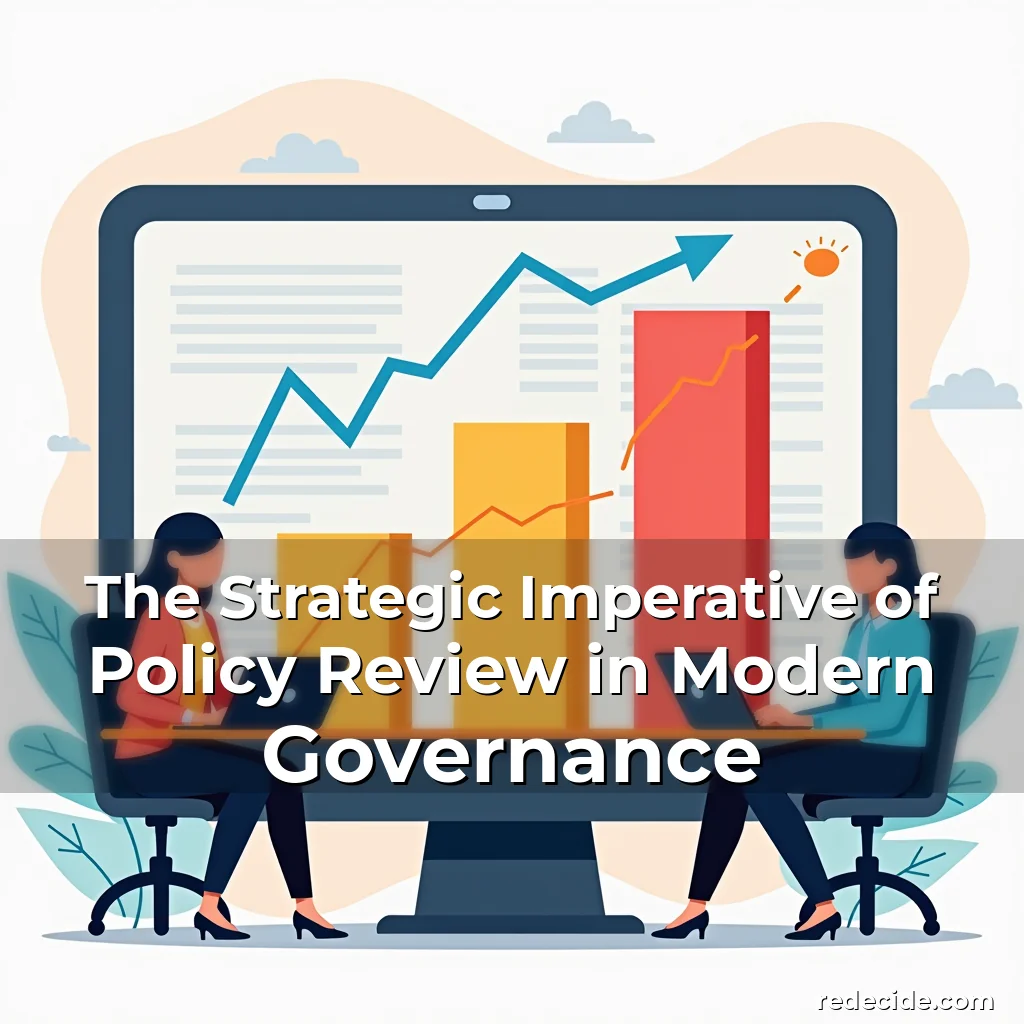
The Strategic Imperative of Policy Review in Modern Governance
In an era marked by rapid technological advancements, shifting societal norms, and evolving global challenges, the process of policy review has emerged as a cornerstone of effective governance. For communities such as ReDecide, where informed decision-making is paramount, understanding the nuances of policy evaluation can mean the difference between stagnation and progress.
This article delves into the multifaceted world of policy reviews, exploring their purpose, methodology, impact, and future directions. Whether you’re a policymaker, citizen advocate, or simply curious about how decisions shape our lives, this guide will equip you with the knowledge to engage meaningfully in the democratic process.
Understanding the Purpose of Policy Reviews
Policies are not static documents; they require periodic reassessment to ensure alignment with current realities. This dynamic nature necessitates regular evaluations that go beyond mere compliance checks to encompass broader strategic considerations.
A well-conducted policy review serves several critical functions. It identifies gaps in existing frameworks, ensures continued relevance amid changing circumstances, and provides opportunities for stakeholder input through structured engagement mechanisms.
- Evaluating effectiveness: Assessing whether policies achieve their intended outcomes requires quantitative analysis alongside qualitative feedback from affected populations.
- Identifying inefficiencies: By examining implementation processes, policymakers can pinpoint bureaucratic hurdles that hinder execution efficiency without compromising objectives.
Moreover, these assessments help organizations avoid costly missteps by flagging potential unintended consequences early in the lifecycle of any given initiative.
Critically, policy reviews also serve as catalysts for innovation, encouraging creative problem-solving approaches when traditional methods prove insufficient under new conditions.
The Methodology Behind Effective Policy Evaluation
Conducting thorough policy evaluations demands methodological rigor grounded in both empirical evidence and contextual awareness. A systematic approach ensures that findings accurately reflect real-world impacts rather than theoretical assumptions.
Central to this process is establishing clear criteria against which policies will be measured. These metrics might include cost-benefit ratios, social equity indicators, environmental sustainability benchmarks, or public satisfaction surveys tailored specifically to each domain being assessed.
Data collection forms another vital component, requiring diverse sources ranging from administrative records to field observations and interviews with key stakeholders across different sectors.
Analytical techniques vary depending on the complexity of the subject matter but typically involve statistical modeling combined with narrative synthesis to create holistic understandings of performance trends over time.
Quantitative vs Qualitative Approaches
Numerical data offers objective measures useful for tracking measurable changes in policy outcomes. However, numbers alone cannot capture nuanced aspects such as community sentiment shifts or unforeseen ripple effects within complex systems.
To complement quantitative analyses, researchers often employ ethnographic studies, case comparisons, and participatory action research methodologies that provide deeper contextual insights essential for comprehensive evaluations.
For instance, while economic indicators may show reduced crime rates following new policing strategies, qualitative feedback could reveal growing distrust among marginalized groups who feel disproportionately targeted by these initiatives.
Balancing both perspectives allows evaluators to construct narratives that inform not only what works but also why certain interventions succeed or fail within particular socio-political environments.
Stakeholder Engagement in Policy Review Processes
Meaningful policy reviews depend heavily on active participation from various stakeholders whose lived experiences offer invaluable perspectives during assessment phases.
Engaging local communities, industry experts, civil society representatives, and academic institutions fosters inclusive dialogue that enriches analytical depth while promoting ownership of resulting recommendations.
Structured consultation mechanisms such as town hall meetings, online forums, and expert panels enable diverse voices to contribute meaningfully towards shaping revised policy frameworks.
However, successful engagement goes beyond token inclusion; it requires genuine commitment to incorporating feedback through transparent communication channels and follow-through actions based on collected insights.
Case Studies Illustrating Successful Policy Reviews
Examining concrete examples helps illustrate best practices in conducting impactful policy assessments. One notable success story comes from urban transportation reforms implemented in Scandinavian cities.
These municipalities conducted extensive reviews revealing outdated infrastructure prioritizing private vehicle use at the expense of pedestrian safety and accessibility needs. Subsequent revisions focused on expanding public transit networks coupled with improved cycling infrastructure.
The outcome was significant reductions in traffic congestion, lower carbon emissions, and increased mobility options for residents across varying socioeconomic backgrounds.
Similarly, educational reform efforts in Singapore demonstrate how rigorous policy evaluations led to substantial improvements in student achievement levels through curriculum modernization aligned with contemporary learning theories.
Challenges Facing Contemporary Policy Review Initiatives
Despite its importance, implementing robust policy review systems faces numerous obstacles including political resistance, resource constraints, and information asymmetry issues.
Sometimes, powerful interest groups benefit from maintaining status quo arrangements even when alternative solutions demonstrably yield better results. Overcoming such entrenched opposition requires strategic coalition-building and persuasive advocacy grounded in compelling evidence.
Limited financial resources often restrict the scope and frequency of comprehensive evaluations, particularly in developing economies where competing priorities demand immediate attention.
Additionally, lack of access to reliable data poses another challenge, especially in regions characterized by weak institutional capacity or historical opacity regarding governmental operations.
Future Directions for Policy Review Practices
As technology continues advancing rapidly, so too must our approaches toward evaluating public policies adaptively. Emerging tools present unprecedented opportunities for enhancing transparency and accountability in governance structures.
Artificial intelligence applications now facilitate predictive analytics capable of identifying emerging risks before they manifest fully, allowing preemptive adjustments rather than reactive corrections post-factum.
Blockchain technologies hold promise for creating immutable audit trails ensuring verifiable traceability throughout policy implementation cycles, thereby strengthening trust between governing bodies and served populations.
Digital platforms designed for crowdsourced feedback enable continuous monitoring through real-time reporting features accessible via mobile devices, transforming passive observers into active participants in ongoing regulatory dialogues.
Conclusion
Policy review stands out as a crucial mechanism enabling governments and organizations alike to remain responsive, adaptive, and accountable amidst ever-changing landscapes.
By embracing evidence-based approaches supported by engaged communities and leveraging innovative technologies, we empower ourselves collectively towards building fairer societies rooted in informed choices rather than arbitrary decrees.