The Hidden Forces Shaping Our Decisions: Unraveling Cognitive Bias
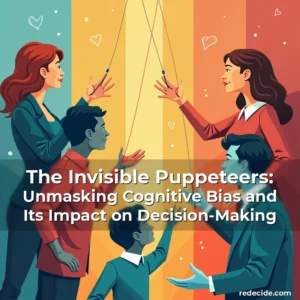
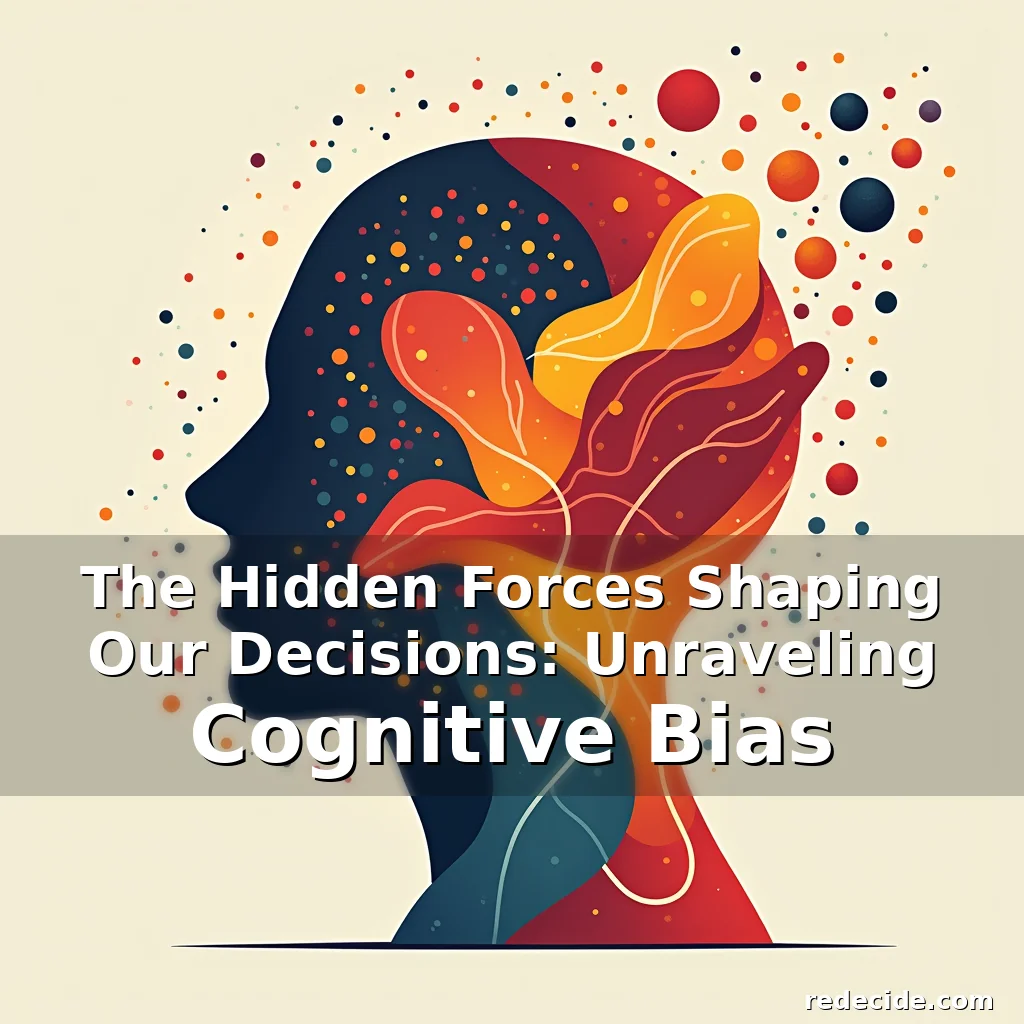
Cognitive biases are invisible mental shortcuts that influence our judgment and decision-making processes without us even realizing it. These patterns of thought can lead to systematic errors in reasoning, affecting everything from personal relationships to professional choices.
In an age where information overload is constant, understanding these hidden forces becomes crucial for making better decisions. The human brain has evolved to make quick judgments, but sometimes those instincts work against us.
The Evolutionary Roots of Cognitive Biases
Our brains have developed over millions of years through natural selection, favoring survival mechanisms that helped early humans thrive. Many cognitive biases originated as adaptive traits rather than flaws.
For example, pattern recognition allowed ancient humans to identify predators or find food sources quickly. This ability persists today but often leads to false positives when interpreting modern data.
Evolutionary advantages:
- Quick threat detection saved lives during dangerous times
- Rapid social judgment facilitated group cohesion
- Mental energy conservation was essential for survival
While these evolutionary adaptations served their purpose then, they now manifest as biases that can distort our perception of reality in complex environments. Understanding this historical context helps explain why we still experience these mental tendencies today.
Common Types of Cognitive Biases That Shape Perception
There are numerous types of cognitive biases, each influencing different aspects of cognition. Some affect memory recall while others impact risk assessment and decision-making.
Confirmation bias, for instance, causes people to seek out information that supports existing beliefs while ignoring contradictory evidence. This tendency reinforces preconceived notions and limits open-mindedness.
Another prevalent bias is the availability heuristic, which makes people judge the probability of events based on how easily examples come to mind. Recent news stories often create misleading perceptions about actual risks.
These biases don’t operate independently; they frequently interact in complex ways that amplify their effects on behavior and outcomes.
The Impact of Confirmation Bias on Decision-Making
Confirmation bias creates a self-reinforcing loop where individuals selectively gather information that confirms their existing views. This process can lead to significant errors in judgment across various domains.
Research shows that confirmation bias affects political opinions, medical diagnoses, and investment strategies. In healthcare settings, doctors may overlook alternative diagnoses that contradict initial assumptions.
A study published in the Journal of Experimental Psychology found that participants were twice as likely to remember information supporting their viewpoint compared to opposing viewpoints.
This selective retention distorts our understanding of facts by creating skewed internal narratives that feel objectively true despite being incomplete or inaccurate.
How Anchoring Effects Influence Financial Decisions
Anchoring bias occurs when people rely too heavily on the first piece of information encountered when making decisions. This phenomenon significantly impacts financial behaviors and market predictions.
When evaluating property prices, buyers often anchor themselves to the asking price rather than considering objective market values. This psychological effect influences negotiation tactics and final purchase decisions.
In stock trading scenarios, investors might fixate on recent performance metrics instead of analyzing long-term trends. This tunnel vision can result in poor investment choices during volatile markets.
Educating oneself about anchoring effects enables more rational financial decision-making by encouraging comparison shopping and seeking diverse perspectives before committing funds.
Overcoming Availability Heuristic Through Critical Thinking
The availability heuristic leads people to estimate probabilities based on readily available examples rather than statistical accuracy. This shortcut often produces distorted risk assessments.
During emergencies, people tend to overestimate rare dangers because media coverage makes them seem more common. Conversely, routine threats receive less attention due to lack of dramatic presentation.
To counteract this bias, experts recommend practicing probabilistic thinking exercises. Calculating base rates and using statistical frameworks improves decision quality by reducing reliance on emotional responses.
Developing habits around factual verification also strengthens critical thinking skills. Cross-checking information from multiple independent sources increases awareness of potential heuristics at play.
The Role of Social Proof in Group Behavior
Social proof refers to the tendency to follow others’ actions when unsure what to do. This powerful influence shapes consumer behavior, voting patterns, and online interactions.
Marketers exploit this principle by showcasing customer testimonials and popularity indicators. Online reviews often determine purchasing decisions even when objective product knowledge is limited.
In crisis situations, crowdsourcing information through social media platforms amplifies both accurate and misleading messages simultaneously. This dynamic can spread misinformation rapidly within communities.
Becoming aware of social proof mechanisms allows individuals to evaluate decisions more independently rather than simply following crowd behavior blindly.
Recognizing and Mitigating Self-Serving Bias
Self-serving bias leads people to attribute successes to personal qualities while blaming external factors for failures. This protective mechanism maintains ego but can hinder growth opportunities.
In academic settings, students who perform well often credit intelligence whereas poor results get attributed to unfair testing conditions. This pattern affects learning motivation and development trajectories.
Professional athletes demonstrate similar tendencies by emphasizing talent when winning matches yet attributing losses to referee mistakes or bad luck.
Confronting this bias requires honest reflection practices. Keeping success/failure journals with balanced analysis helps develop realistic self-assessments over time.
Framing Effect: How Language Shapes Perceptions
The framing effect demonstrates how presenting identical information differently can dramatically alter decisions. This linguistic nuance profoundly impacts attitudes toward health choices and policy preferences.
Healthcare professionals use framing techniques to encourage positive behaviors. Describing treatment options as “90% effective” versus “10% failure rate” elicits different patient reactions despite conveying same meaning.
Policymakers strategically frame economic issues to sway public opinion. Reframing tax reforms as “investment in future generations” rather than “increased levies” changes receptivity levels among voters.
Becoming sensitive to framing techniques enhances analytical capabilities. Questioning word choice and examining underlying motivations improves discernment between genuine intent and manipulative language use.
Strategies for Reducing Cognitive Bias in Everyday Life
Implementing structured approaches helps mitigate the influence of cognitive biases. Creating decision checklists ensures consideration of multiple perspectives before taking action.
Practicing deliberative thinking involves pausing to analyze situations objectively rather than relying on gut feelings. This technique works particularly well for high-stakes decisions requiring careful evaluation.
Engaging with diverse viewpoints challenges existing assumptions by exposing individuals to alternative interpretations. Regularly consuming content from differing ideological backgrounds broadens perspective ranges.
Keeping a decision journal records past choices along with outcomes. Reviewing these entries periodically reveals recurring biases that need targeted improvement efforts.
Conclusion
Cognitive biases shape every aspect of human cognition, often operating beneath conscious awareness. Recognizing these mental tendencies empowers individuals to make more informed choices.
By developing metacognitive awareness and applying deliberate strategies, anyone can reduce the negative impacts of cognitive biases in daily life. Continuous education remains vital for navigating an increasingly complex world filled with informational challenges.