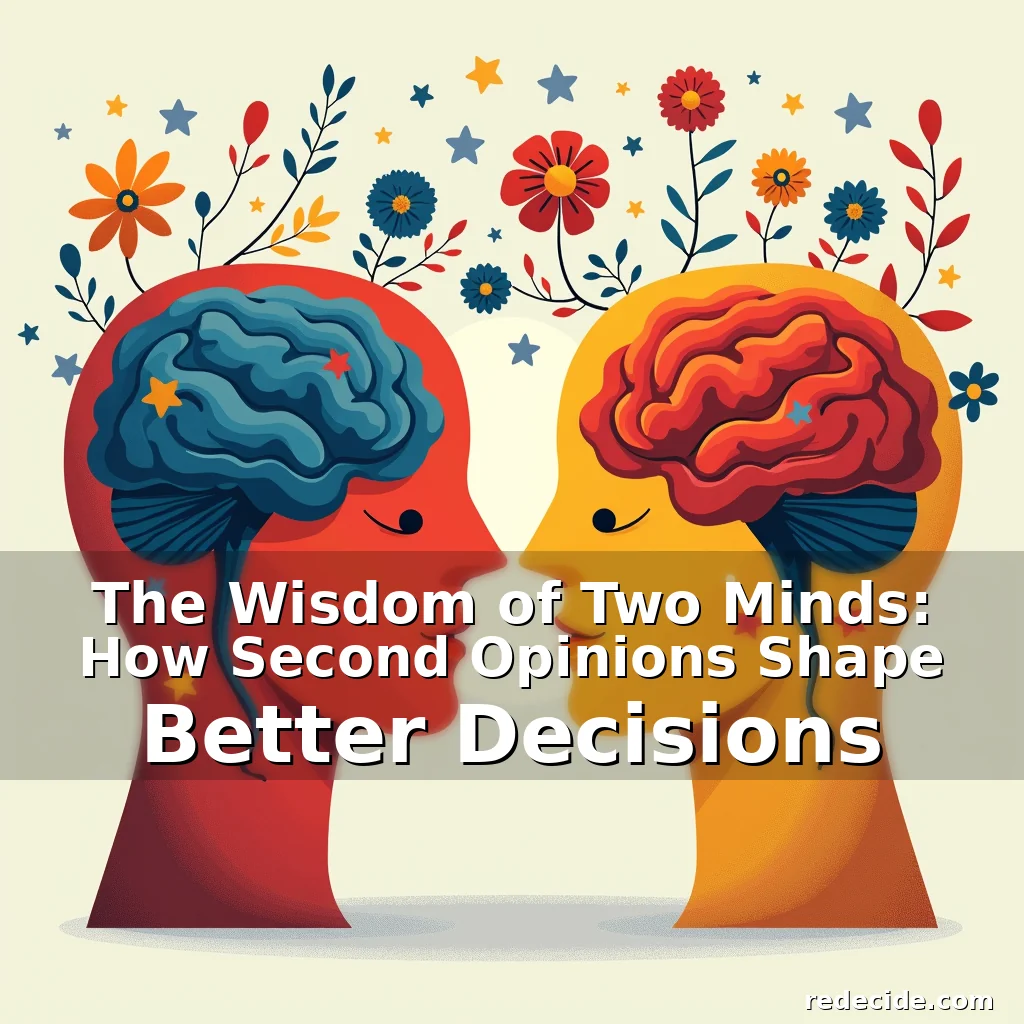
The Wisdom of Two Minds: How Second Opinions Shape Better Decisions
In an era defined by rapid change and complex choices, the power of a second perspective has never been more vital. Whether navigating medical diagnoses, financial investments, or life-altering decisions, seeking another viewpoint can transform uncertainty into clarity.
This guide explores why second opinions matter deeply within the ReDecide community—a network dedicated to thoughtful deliberation—and provides practical strategies for leveraging alternative perspectives effectively.
The Hidden Value of Diverse Perspectives
Human cognition is inherently limited by our individual experiences and biases. Neuroscientists estimate that we process only about 1% of available data at any moment, creating blind spots that can lead to flawed conclusions.
A second opinion acts as a cognitive safety net, catching errors that escape our initial analysis. This is particularly critical in high-stakes scenarios where mistakes carry significant consequences.
Consider the following:
- Doctors who seek peer review reduce diagnostic errors by up to 38%, according to JAMA Internal Medicine research
- Financial advisors utilizing collaborative decision frameworks report higher client satisfaction rates
- Couples consulting family mediators resolve conflicts more successfully than those relying solely on personal negotiation
The most effective second opinions come from individuals with complementary expertise rather than identical knowledge bases. Combining diverse skill sets often reveals solutions that would remain hidden in isolation.
When Should You Seek a Second Opinion?
Determining the right time to pursue additional input requires self-awareness about decision complexity and potential consequences. High-risk situations demand greater scrutiny than routine choices.
Three red flags indicate strong candidates for second opinions:
- Significant financial implications exceeding 10% of annual income
- Potential impact on long-term relationships or health outcomes
- Emotional distress during the decision-making process
However, over-reliance on external validation can become counterproductive. Balance is key—seek guidance when appropriate, but avoid paralyzing indecision through excessive consultation.
Professionals across fields recommend establishing clear criteria for when to consult others. For example, investors might decide upfront that any transaction over $50,000 requires independent verification.
Beyond Healthcare: Expanding the Concept of Second Opinions
While commonly associated with medicine, the principle extends far beyond clinical settings. Entrepreneurs regularly seek business plan reviews, lawyers obtain legal advice from colleagues, and educators get feedback on curricula.
The digital age has transformed access to alternative viewpoints. Online platforms now allow instant consultation with experts worldwide, revolutionizing traditional models of decision support.
The Evolution of Decision-Making Tools
From ancient councils to modern AI-driven analytics, humanity has always valued collective wisdom. Today’s technology enables unprecedented levels of collaboration while maintaining privacy protections.
Data shows that remote consultations yield results comparable to in-person meetings for many types of decisions. Virtual reality even allows immersive scenario testing with multiple stakeholders simultaneously.
Building a Network of Trusted Advisors
Create a personalized “decision circle” comprising specialists from relevant domains. These could include mentors, industry peers, or academic consultants depending on your situation.
Maintain ongoing relationships with this group rather than treating them as occasional resources. Regular communication helps build trust and ensures timely availability when needed most.
Consider diversifying your advisory panel geographically and culturally. Different backgrounds often reveal novel approaches to problem-solving that might otherwise go unnoticed.
Your network should ideally include both agreeable and dissenting voices to encourage balanced evaluation of options. Healthy debate strengthens final decisions rather than undermining them.
Navigating Cultural Differences in Second Opinions
Cultural norms significantly influence willingness to seek outside input. Some societies emphasize consensus-building while others prioritize individual judgment.
Understanding these dynamics is crucial for cross-cultural interactions. For instance, hierarchical cultures may require formal channels for obtaining alternative views compared to egalitarian environments.
Linguistic barriers can complicate the process. Professional interpreters or cultural liaisons sometimes become necessary components of international advisory networks.
Educational systems vary widely in teaching critical thinking skills. Individuals from certain regions may benefit more from structured training in evaluating multiple perspectives.
The Psychological Impact of Multiple Perspectives
Research indicates that exposure to differing viewpoints enhances cognitive flexibility. People who regularly engage with opposing ideas demonstrate improved problem-solving abilities.
However, too much conflicting information can induce decision fatigue. Experts suggest limiting consultations to three primary sources unless dealing with exceptionally complex matters.
There exists a fine line between being open-minded and suffering from analysis paralysis. Establishing decision thresholds helps prevent getting lost in endless possibilities.
Positive reinforcement techniques work well after receiving new insights. Celebrate moments of breakthrough realization to reinforce constructive skepticism as a valuable trait.
Technology’s Role in Enhancing Second Opinions
Digital tools now facilitate real-time collaboration across continents. Cloud-based platforms enable secure sharing of sensitive documents for joint review.
Artificial intelligence applications analyze patterns in vast datasets, identifying correlations human minds might overlook. These systems serve as powerful complements to expert opinions.
Voice recognition software makes accessibility easier for people with disabilities, broadening participation in multi-perspective discussions.
Blockchain technology introduces transparency to professional credentials, helping verify the qualifications of those offering second opinions online.
Common Misconceptions About Seeking Advice
Many believe they’re alone in facing difficult choices. Statistics show, however, that nearly everyone consults someone informally before major decisions—even if they don’t label it as a’second opinion.’
Some fear appearing incompetent by admitting uncertainty. Yet studies confirm that leaders who openly seek input achieve better outcomes than those pretending to know everything.
Misunderstandings often arise around what constitutes valid counsel. Legitimate second opinions require genuine expertise rather than casual suggestions from unqualified friends.
There’s a myth that taking extra time guarantees better results. Quality trumps quantity; focused consideration beats hasty multiple consultations.
Fostering Organizational Cultures that Support Second Opinions
Companies that encourage questioning established protocols foster innovation. Google’s Project Aristotle found psychological safety—the belief that one can speak freely—to be the strongest predictor of team effectiveness.
Leadership plays a pivotal role in modeling openness to alternative viewpoints. When executives admit gaps in their own knowledge, employees feel empowered to do the same.
Implementing structured debrief sessions after major projects helps identify lessons learned from missed opportunities or successful collaborations.
Training programs focusing on metacognition—thinking about thinking—equip teams to evaluate their own decision-making processes objectively.
Personal Development Through Continuous Learning
Seeking second opinions isn’t just about solving immediate problems—it cultivates lifelong learning habits. Each experience adds depth to our understanding of how to approach future challenges.
Knowledge becomes power when paired with humility. Recognizing limitations opens doors to growth that closed-minded certainty blocks.
Curiosity drives the best second-opinion seekers. They ask questions not out of doubt but from a desire to understand more fully.
Keeping journals of past decisions and received advice creates a living repository of experiential learning that evolves over time.
Conclusion
Second opinions represent more than mere procedural steps—they embody a mindset valuing truth above ego, growth over complacency, and quality over expediency.
By embracing this philosophy, members of the ReDecide community can navigate today’s complexities with confidence, knowing they’ve considered alternatives and made deliberate choices grounded in thorough examination.